


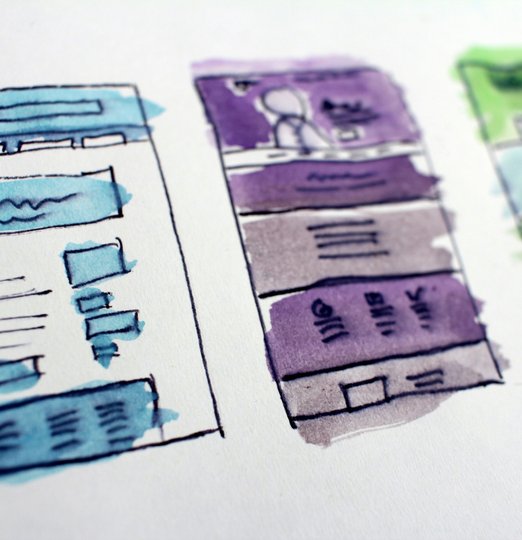

Website Redesign
Your site still works. It just stopped working for you.
The pages load. The forms submit. Nothing is technically broken. But somewhere along the way, the site stopped doing its job. Maybe it takes four seconds to load on a phone and visitors leave before they see your services. Maybe the design screams 2019 and you have stopped sending people the link. Maybe you have outgrown a five-page Wix site and every time you try to add something, the whole layout fights you.
Most businesses I work with on a redesign are not starting from zero. They have a site, sometimes one they spent good money on. The problem is not that the old site was bad when it launched. The problem is that websites age, and the platforms they sit on age faster.
WordPress themes stop getting updates. Page builders stack layers of code on top of each other until a simple homepage weighs 4MB. Plugins that were fine two years ago become security holes nobody patches. The slow creep is hard to notice until you run a speed test or watch a customer try to navigate on their phone.
A redesign here means a rebuild
I should be upfront about this. I do not log into your existing WordPress dashboard, swap the theme, tweak some colours, and hand it back. That kind of surface-level refresh leaves all the underlying problems in place.
What I do is take everything your current site gets right (your content, your domain, your Google history) and build a completely new bespoke site underneath it. Hand-coded HTML and CSS, no CMS, no page builder, no plugin stack. The old platform goes away entirely.
This matters because the platform is usually the reason for the redesign in the first place. A slow site built on WordPress will still be slow after a theme change if the same twenty plugins are running underneath. A Wix site will still feel rigid after a template swap because the limitations are baked into the builder itself.
Starting clean means the new site is as fast and as light as it is ever going to be on day one, and it stays that way because there is no software layer gradually degrading performance over time.
What happens to your existing rankings
This is the part most redesign services gloss over, and it is the part that can cost you the most if it goes wrong.
Every page on your current site that Google has indexed has a URL. If those URLs change during a redesign and nobody sets up redirects, Google treats the new pages as brand new content. Any authority your old pages had built up disappears. Enquiries can drop off for weeks or months while Google re-crawls and re-evaluates.
I plan the URL structure before writing a single line of code. Pages that keep the same slug keep the same URL. Pages that move get a 301 redirect from the old address to the new one. The updated sitemap goes to Google Search Console on launch day. If your current site has traffic worth protecting, the migration is planned around keeping it.
This is also where having one person handle the entire project helps. There is no gap between "the developer" and "the SEO person" where redirects fall through the cracks. I handle the on-page SEO and the technical SEO alongside the build, so the migration and the search visibility are the same conversation.
Same pricing, different starting point
A redesign follows the same pricing as a new build because the scope of work is the same. I am building a complete site either way. The starting point is different (you already have content, a domain, and a live site to work around), but the output is the same.
That means £150 a month with nothing upfront on the Business plan, or £2,500 as a one-time payment. The monthly plan includes hosting, SSL, ongoing support, and content edits. The one-time plan transfers full ownership of the code to you.
Extra pages beyond the included five are £100 each. If the project involves migrating an online store with product data and payment integrations, that falls under a different service with its own pricing and scope.
The sites I redesign most often
Template sites that were set up quickly and never properly finished. WordPress builds that have accumulated years of plugins and now take five seconds to load. Squarespace or Wix sites that looked polished at first but cannot be customised beyond what the builder allows. Agency sites where the original developer disappeared and nobody knows how to update it anymore.
The common thread is that the business has changed, but the website has not kept up. A brochure site that was fine for a startup might not reflect a business that now has three service lines and serves customers in Bletchley, Newport Pagnell, and across Milton Keynes. And a basic site with no keyword strategy behind it is not going to show up when people search for what you do.
If you are unsure whether your site needs a redesign or something smaller (a content update, a speed fix, a styling refresh), I am happy to take a look and tell you honestly. Smaller fixes fall under the dev rate at £50 an hour. A full redesign only makes sense when the foundation itself is the problem.
Your old site stays live until the new one is ready
Nothing changes for your visitors during the build. The new site is developed separately, and you get a staging link to review it before anything goes live. Content, layout, forms, mobile, all of it gets checked and signed off by you first.
On launch day, the DNS switches over, redirects go in, and the old site comes down. I keep an eye on things for the first couple of weeks after launch to catch anything that behaves differently in production than it did in staging. If something needs adjusting, it gets handled straight away.
The whole thing typically takes two to four weeks for a standard 5-page site. Larger projects or sites with a lot of content to migrate take longer, and I will give you a realistic timeline before we start.
Ready for a Better Website That Ranks?
Let's Build itMonday to Sunday: 24 hours
Call, Text or WhatsApp us anytime
for a free consultation call.