


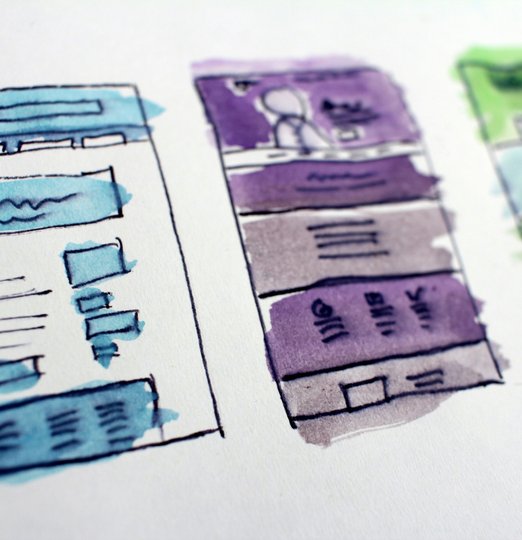

Brochure Website Design
Most small businesses need a website that does one job well: tell people what you do, show them you are good at it, and make it simple to get in touch. That is a brochure website. It is the most common type of small business site for a reason, and it is the type I build most often. This page covers what a brochure site actually is, what you should expect it to include, where it fits against other types of website, what it costs, and how I put one together.
What a brochure website is (and what it is not)
A brochure website presents your business to people who are looking for you or for what you sell. It covers your services, your background, how to reach you, and enough about the way you work that a visitor can decide to pick up the phone or fill in a form. Most brochure sites sit between three and ten pages.
It is not an online shop, a booking system or a customer login portal. If you need to sell products and take payments, that is e-commerce website design, a different type of build with different requirements. A brochure site is purely informational, with conversion (getting someone to contact you) built into every page.
What a good brochure site should include
The page count matters less than having the right pages, each doing a clear job. A strong brochure website usually covers these:
- Homepage. A first impression that makes your service and your location obvious within a few seconds. A clear statement and a way to act on it.
- Service pages. One page per core service, written around the words your customers actually search for. This is where most of your organic traffic will land.
- About page. People buy from people, especially at local level. This page builds enough trust that a visitor feels comfortable getting in touch.
- Contact page. Phone number, email, a form, and your location if it matters. Visible from every page, not buried three clicks deep.
Beyond that, a portfolio page, a pricing overview or a short FAQ section can all earn their place depending on your business. The point is that every page exists for a reason, not because a template shipped with it.
The difference between a brochure site and a full marketing website
This is where confusion creeps in, and it matters because it affects what you should expect your site to do after launch.
A brochure website is built to convert people who already find you. Someone hears your name, searches for you, or clicks a link you have shared, and the site gives them enough confidence to make contact. It does that job extremely well, and for plenty of businesses, that is all they need.
It is not built to rank for competitive search terms on its own. Ranking across dozens of local searches takes more pages, ongoing content and a proper SEO strategy built on top of the site. I mention this upfront because a lot of providers sell a five-page brochure site and imply it will bring in traffic from Google. A brochure site might pick up a couple of basic search terms, but if ranking is the goal, you need the structure to support it, things like local SEO, keyword research and location-specific content.
The good news: a properly built brochure site is the right foundation either way. Starting with something that converts well for the people who already find you means adding SEO later is straightforward. Starting with a slow, bloated template and trying to bolt rankings on top is much harder.
Hand-coded vs template: why it matters for a brochure site
A lot of brochure websites are built on WordPress with a page builder like Elementor or Divi, or on platforms like Wix and Squarespace. Those tools load code for features your five-page site will never use: sliders, animations, plugin frameworks, font libraries and tracking scripts that sit there adding weight to every page load.
I hand-code every brochure site in HTML, CSS and JavaScript. The result is a site that carries only the code it actually needs. That difference shows up in load times, in Lighthouse scores, and in the way the site feels on a phone over a mobile connection. Google's own research puts the cost of a slow site at roughly 20% of mobile conversions lost for every extra second of load time. For a small business site, fast is not a luxury. It is the difference between someone staying and someone leaving.
A hand-coded site is also simpler to maintain long-term. There are no plugin updates to break things, no theme conflicts, no database to keep patched. The site is just files on a server, and files do not go out of date. (If you already have a site that has slowed down or fallen behind, website redesign is where that conversation starts.)
Who a brochure website is right for
A brochure site fits best when you can tick most of these:
- You sell a service (or a small range of products) rather than running an online shop.
- Most of your customers come through referrals, social media, Google Maps, or offline marketing, and the website's job is to make the sale once they land.
- You need a professional online presence that loads fast and looks right on every device.
- You are not trying to rank for dozens of competitive search terms (yet).
Tradespeople, consultants, local service providers, therapists, tutors, small agencies and anyone whose business runs on enquiries rather than online transactions: a brochure site is built for exactly this.
When a brochure site is not enough
There are two clear signals that you need something beyond a simple brochure layout. The first is functionality: if you need to take payments, manage bookings, or give customers a login area, you are past brochure territory and into an e-commerce build or a bespoke project with custom features. The second is traffic: if your business depends on being found through Google for competitive terms, a five-page site does not give search engines enough content to work with. In that case, a larger site with on-page SEO, location pages and an ongoing strategy is the right move.
I am straightforward about this during the first conversation. If a brochure site will do the job, I will say so. If you need more, I will explain what "more" looks like and what it costs, so you can make the call with real numbers in front of you.
What a brochure website costs
UK agencies typically charge between £3,000 and £6,000 for a brochure site, and freelancers range from about £1,500 to £3,000. Those prices reflect a mix of design, build and markup. Most quote per-project, with ongoing costs billed separately.
I price brochure sites in two ways, both including a hand-coded build with up to five pages:
- Monthly: £150 a month, nothing upfront. This covers the design, the build, hosting, edits, support and ongoing updates. Twelve-month minimum term.
- One-time: £2,500. You own the site outright after the build. Hosting is available at £25 a month, and edits and support at £75 a month, if you want them.
Extra pages beyond the included five are £100 each. Either way, you get the same hand-coded, performance-focused build. The monthly option spreads the cost; the one-time option gives you full ownership from day one.
How I build your brochure site
You work with me directly at every stage. One person, first call to launch.
- Brief. A short conversation and a questionnaire about your business, your customers and the look you are going for. This shapes the structure and the tone of every page.
- Design and code. I design each page around your brand and your goals, then hand-code it from scratch. You see progress as I go and we adjust together.
- Review. You check the finished site on your phone and your laptop, flag anything you want changed, and I make the revisions.
- Launch. The site goes live. On the monthly plan, I handle hosting, edits and updates from that point on. On a one-time build, I hand over the files and you are in control.
What every brochure build includes
- Hand-coded HTML, CSS and JavaScript (no WordPress, no page builders, no themes)
- A design created for your business, not pulled from a library
- Responsive layout tested across phones, tablets and desktops
- Performance targets of 90+ across all four Google Lighthouse categories
- Accessibility built to WCAG 2.2 AA
- On-page SEO fundamentals: proper heading structure, meta titles, meta descriptions, image alt text and clean URLs
After launch, the site stays under ongoing maintenance on the monthly plan, or you manage it yourself on a one-time build. And if the business grows to the point where you want to compete in local search results, the site is already built on the kind of clean, fast foundation that local SEO and technical SEO work best on. Nothing needs to be torn down to scale up.
Ready for a Better Website That Ranks?
Let's Build itMonday to Sunday: 24 hours
Call, Text or WhatsApp us anytime
for a free consultation call.